Why skin needs acids at all
Skin renews itself: spent cells in the outer layer shed to make way for new ones. With age, stress and dryness that process slows down – tone dulls, pores clog, texture roughens. Acid exfoliation gently dissolves the bonds between spent cells and restores the natural pace.
AHA: fast results, at a price
Alpha-hydroxy acids – glycolic, lactic, mandelic – are water-soluble with a small molecule. They penetrate quickly and deliver visible results, but speed has a cost: tingling, sun sensitivity and irritation on reactive skin.
BHA: oily skin's best friend
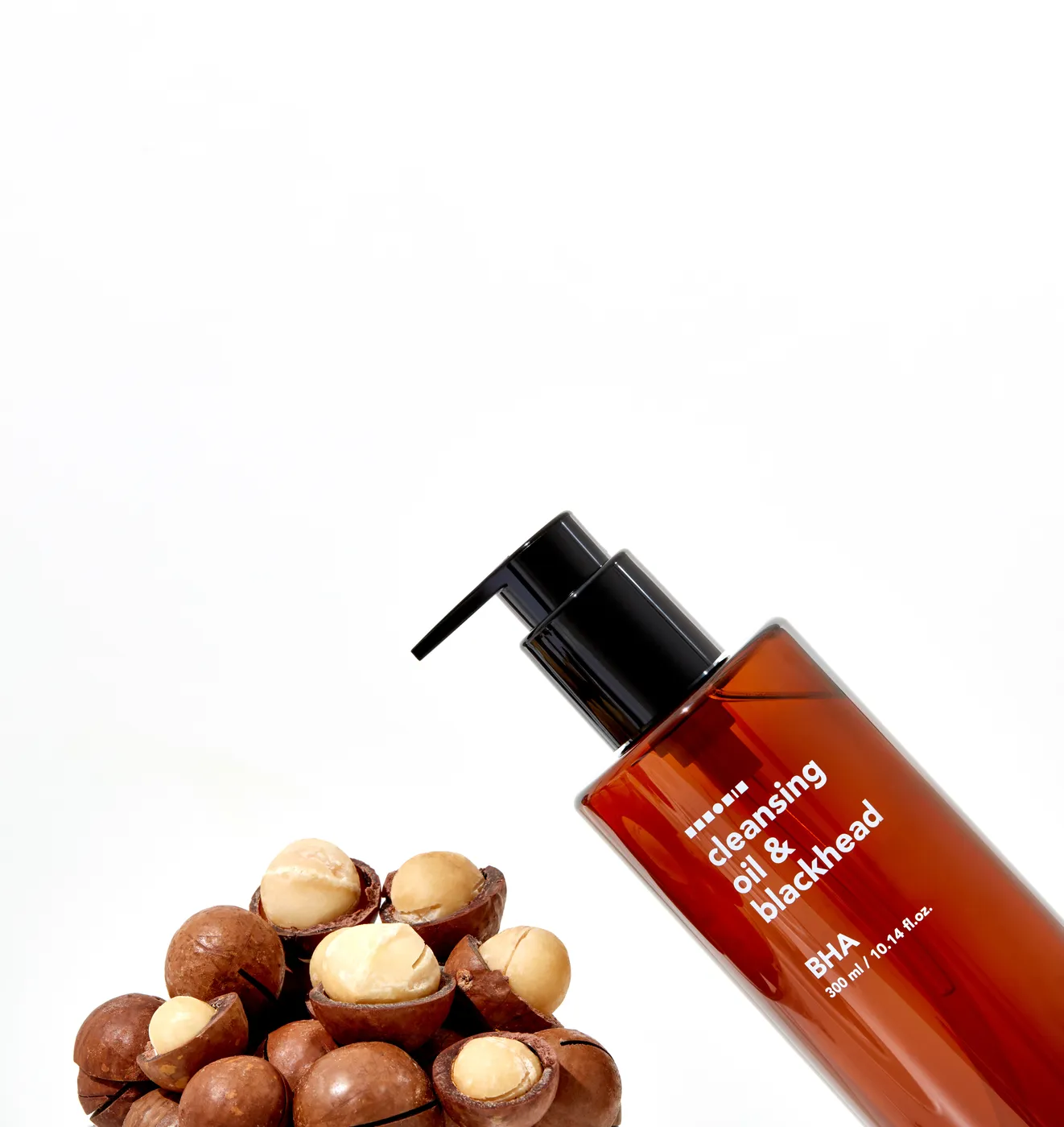
Beta-hydroxy acid (salicylic) is oil-soluble, so it can travel through sebum straight into the pore and clean it from within. It is the best tool against blackheads – but it can over-dry sensitive or dry skin.
PHA: the third generation – gentleness by design
Polyhydroxy acids – gluconolactone and lactobionic acid – are built differently: the molecule is several times larger than an AHA's. It physically cannot rush deep into the skin, so it works at the surface – gradually, evenly, with no sting. And there's a bonus no other acid offers: PHAs attract moisture like a humectant and act as antioxidants.
That is why PHA is the acid dermatologists recommend for sensitive skin, rosacea-prone skin, and anyone who never got along with acids before.
How Hanskin puts it to work
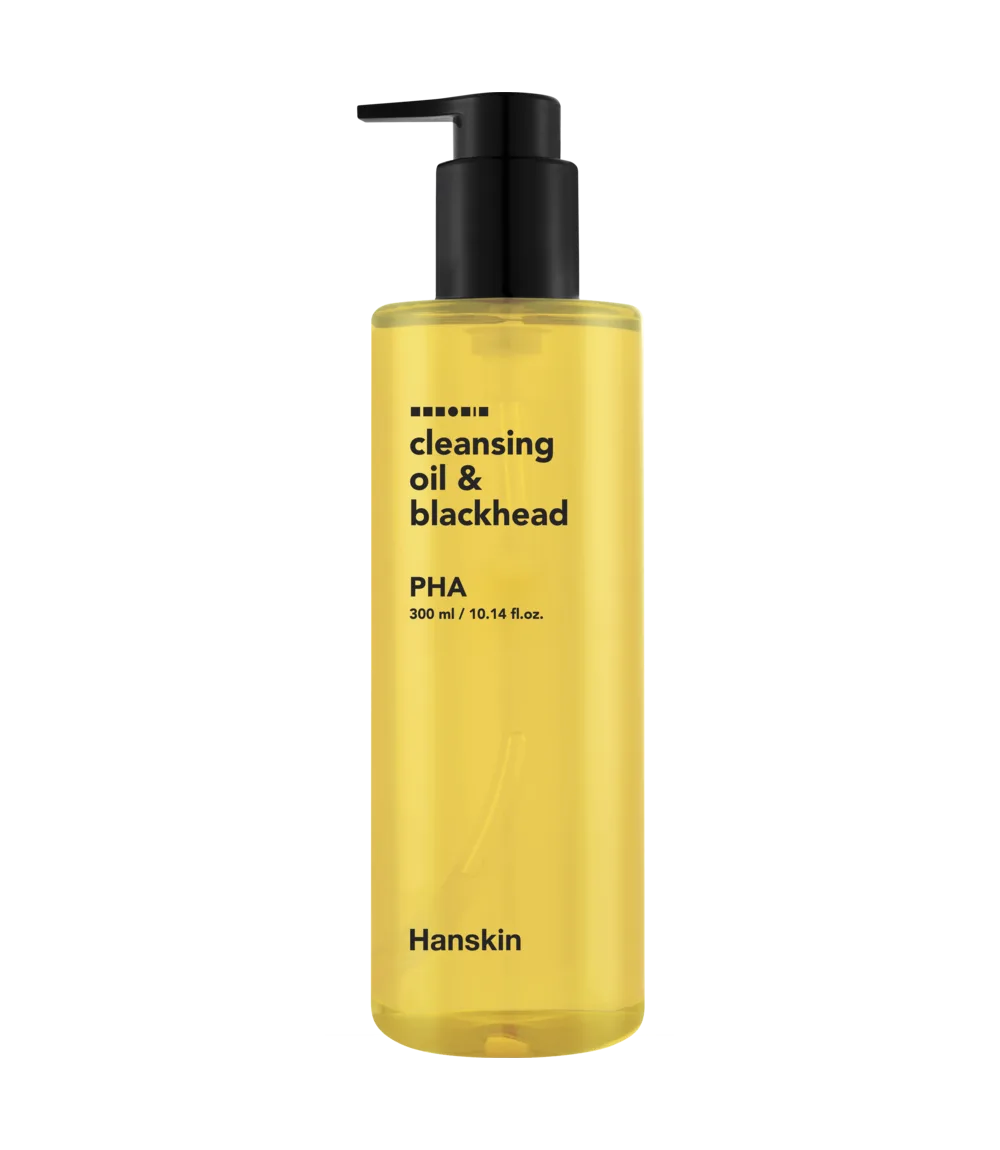
In Pore Cleansing Oil PHA the acid is built into the first cleansing step: while the oil dissolves sunscreen and sebum, gluconolactone quietly refines skin texture. Exfoliation happens a little every evening – no separate "acid day", no recovery period.